Learn about honey
The Art of
Raw Honey
A simple guide to raw Oregon honey, from flower to jar. Educational only; not medical advice.
01 / The basics
What Makes Honey Truly Raw?
Honey is one of nature's simplest and most remarkable foods. Its flavor, aroma, color, and texture are influenced by the flowers bees visit, the seasons, and how the honey is handled after harvesting.
Raw honey is generally understood to be honey that has not undergone intensive heating or processing.
Minimal Heat
Gently Strained
Naturally Complex
02 / Health & pollen
Can Local Honey Help With Seasonal Allergies?
Many people are curious about the relationship between locally harvested honey and seasonal allergies.
The Theory Behind Local Honey
Bees collect nectar from flowering plants, and honey may contain small amounts of naturally occurring pollen from the surrounding environment.
Some people believe that regularly consuming local honey may help their bodies become accustomed to regional pollen.
What Research Actually Shows
Scientific evidence has not established local honey as an effective treatment for seasonal allergies.
Many seasonal allergies are triggered by airborne pollen from trees, grasses, and weeds, which can differ from the pollen found in honey.
The bottom line
Local raw honey can be enjoyed for its distinctive flavor, natural characteristics, and connection to the local environment. It should not be considered a proven treatment or cure for allergies or other medical conditions.
03 / From flower to jar
Why Different Honey Varieties Taste Different
Not all honey tastes the same. The flowers bees visit influence the honey's flavor, color, aroma, and crystallization characteristics. Some honey varieties are light, delicate, and floral, while others are darker, richer, and more robust.
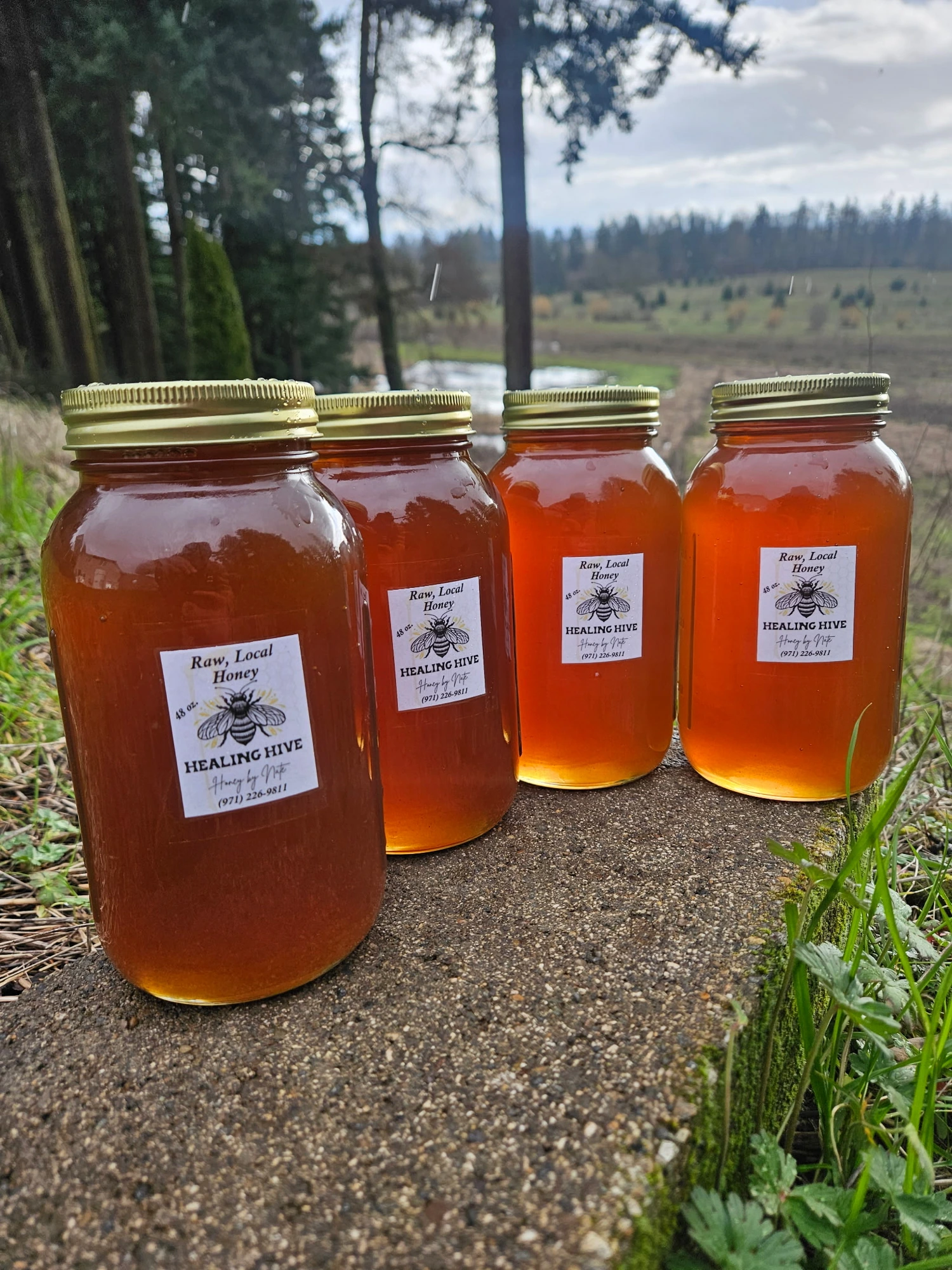
Wildflower Honey
Raw, unfiltered wildflower honey gathered from a diverse mix of seasonal blossoms. Because the floral sources shift with the seasons, the flavor, color and texture vary naturally from batch to batch.
Find it at Our Honey StandBlackberry Blossom Honey
Raw, unfiltered honey from blackberry blossoms. Its character reflects the blossoms the bees visited, so color and flavor can vary naturally over the season.
Find it at Our Honey StandCarrot Blossom Honey
Raw, unfiltered honey from carrot blossoms. A more unusual varietal with its own distinct natural character that changes gently from season to season.
Find it at Our Honey Stand04 / Honey care
Why Honey Crystallizes (And How to Soften It)
If your honey becomes thick, cloudy, grainy, or solid, there is usually no reason to throw it away.
Crystallization is a completely natural process that occurs when glucose in honey forms crystals over time. Different honey varieties crystallize at different rates depending on their natural sugar composition, storage temperature, and other characteristics.
Crystallization does not mean your honey has spoiled. However, crystallization alone is not definitive proof that honey is raw, pure, or unheated.
How to Gently Soften Your Honey
- 1.Place your tightly closed glass jar in a bowl of comfortably warm water, around 100°F.
- 2.Allow it to sit for 15–20 minutes, or longer if necessary.
- 3.Stir gently with a clean, dry spoon.
- 4.Repeat as needed until the desired consistency is reached.
- 5.Avoid excessive heat or microwaving if you want to preserve the honey's delicate natural characteristics.
Storage Tips
- Store honey in a tightly sealed container.
- Keep it in a cool, dry cupboard at room temperature.
- Avoid introducing water into the container.
- Refrigeration is generally unnecessary and can encourage crystallization.
Crystallized honey makes a delicious natural spread on warm toast, biscuits, and sourdough.
05 / Know your honey
Why Buying Local Matters
Buying local honey is about more than what is inside the jar. It is an opportunity to connect with the people behind your food, discover regional flavors, and support small businesses in your community.
- A personal connection to your honey supplier
- Regional floral characteristics
- Supporting local businesses
- Transparency about sourcing
- Seasonal variety
- A more personal shopping experience